PHOTO
66937.0
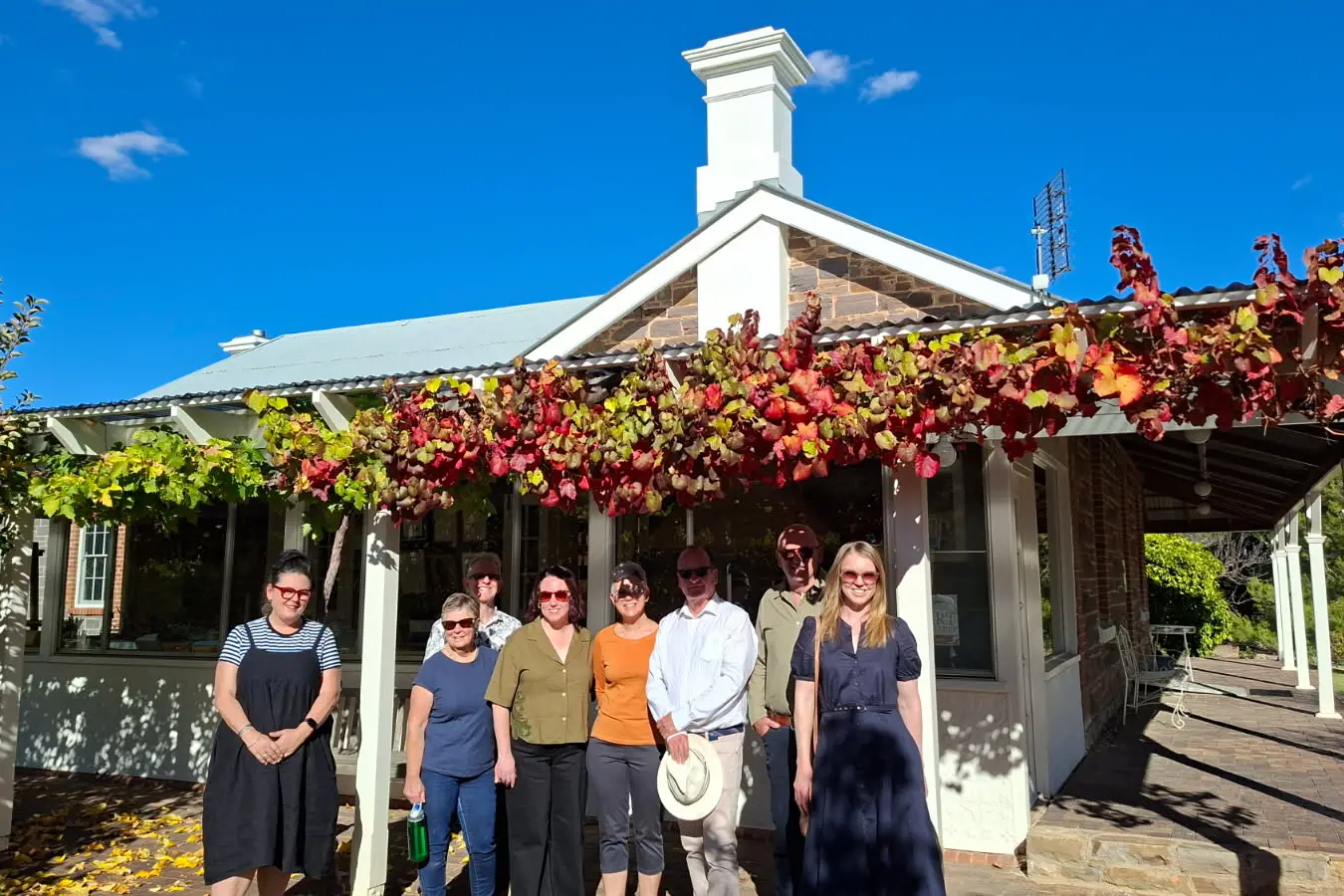
Tourism leaders, council staff, local business owners, event coordinators and community representatives gathered at Ballinaclash Cellar Door on Thursday evening for a “Southern Yarns” session hosted by Destination Southern NSW.
The event brought discussion about the region’s visitor economy directly to those working on the ground, with a relaxed format designed to encourage two-way conversation.
Destination Southern NSW General Manager Richard Everson said the purpose of Southern Yarns was to listen as much as to inform.
“The whole idea of a yarn is a two-way conversation,” he told the room.
“If you’ve got an issue, if you’ve got a question, if you’ve got an opportunity, we take this very seriously… we can’t guarantee we can address everything, but if we don’t know about it, we can’t do anything about it.”
“Our role is to support operators to achieve their goals — because when they succeed, the region succeeds.”
The session covered a range of topics shaping the future of the visitor economy, including changing traveller behaviour, the growing role of technology, and ongoing pressures facing regional businesses.
A key theme was the shift in how visitors plan their trips, with artificial intelligence playing an increasing role in how people find and book experiences.
“Visitors are no longer searching — they’re asking,” Destination Southern NSW Industry Development Manager Jessica Bryden said, referring to the growing use of tools such as ChatGPT, where people can type in a question like ‘plan me a weekend away in the Hilltops’ and then receive tailored suggestions.
While many attendees had begun experimenting with AI, confidence levels varied, reflecting a broader trend across the tourism sector.
The discussion also explored the challenges facing regional businesses, including rising costs, reduced foot traffic and competition from online shopping.
Speakers emphasised the importance of maintaining a strong digital presence while also offering meaningful, experience-based tourism.
Murrumbateman Chocolate Co owner Yasmin Coe shared her experience of adapting her business model.
“Our business would not survive on foot traffic alone,” she said.
She pointed to digital adoption and experience-based offerings, such as workshops and tastings, as key to building a more sustainable business.
“Any region can be a really strong online region,” she said.
The importance of supporting regional communities through travel choices was also highlighted, with attendees encouraged to consider the impact of stopping in smaller towns and supporting local businesses.
“These small stopovers are what keep rural towns alive,” attendees were told.
For the Hilltops region, the discussion highlighted both opportunity and challenge, particularly in how local experiences are presented and accessed by visitors.
Speakers noted that while the region offers a mix of wine, food, arts, heritage and events, making those experiences easy to find and connect remains critical — particularly as travellers increasingly rely on online tools to plan their trips.
Joe Conneely, Manager of the Hilltops Destination & Economy team at Hilltops Council advised that they are working with neighbouring councils across the Southern Tablelands to grow the visitor economy as part of a coordinated regional approach.
Together, the five local government areas — Goulburn Mulwaree, Hilltops, Queanbeyan-Palerang, Upper Lachlan and Yass Valley — represent a population of around 110,000 to 120,000 people across a region larger than Belgium.
Recent tourism data shows the sector contributes an estimated $759.7 million in visitor spending, supporting more than 1,900 jobs across the region.
Locally, Council continues to invest in major events across the region while also updating its Destination Action Plan, with business workshops scheduled in Harden, Boorowa and Young over the coming months.
The session also reinforced the importance of collaboration between businesses, organisations and the wider community in strengthening the visitor economy.
The informal format appeared to resonate, with organisers encouraging feedback as they look to refine future Southern Yarns sessions.