Continuing down Scott Street, past St Patrick's Church and the Catholic Primary School, the Shamrock Trail arrives at a building with ink in its foundations: the Burrowa News Printery in Pudman Street.

Boorowa's newspaper history began badly. George Dunmore Lang brought a printing press to town in November 1862, and the short-lived Burrowa Times lasted just three weeks from 1 January 1863.

Over the next decade the press changed hands and towns several times, producing papers under names including the Burrowa Telegraph, the Burrowa Express and the Burrowa Independent, none of which survived for long.

Lasting success came in 1874, when George Eason took over the failing Burrowa Advocate and relaunched it as the Burrowa News. Ill health forced Eason to sell in 1877, and the paper passed to Malcolm Warner Burnes, whose family ran it for 69 years.

After Burnes died in 1902, his widow, Margaret, took over, followed by their children Emily and Osmond.

The printery moved through several premises around town before Osmond Burnes applied in May 1936 to build a new home in Pudman Street. Built by O. J. Stuart using bricks salvaged from the town's demolished flour mill, the building opened for production on Saturday 17 October 1936.

74359.0
74359.0
Burrowa News Building on Marsden St. Still stands today. PHOTO: Dean Franklin

Renamed the Boorowa News in 1951, the paper went on to win the Country Press Association's W. O. Richards Bronze Trophy in 1958 and became the first newspaper in New South Wales to have its archive microfilmed, preserving issues dating back to 1874. More than 160 years after that first failed edition, the Boorowa News remains one of the longest continuously running country papers in Australia.

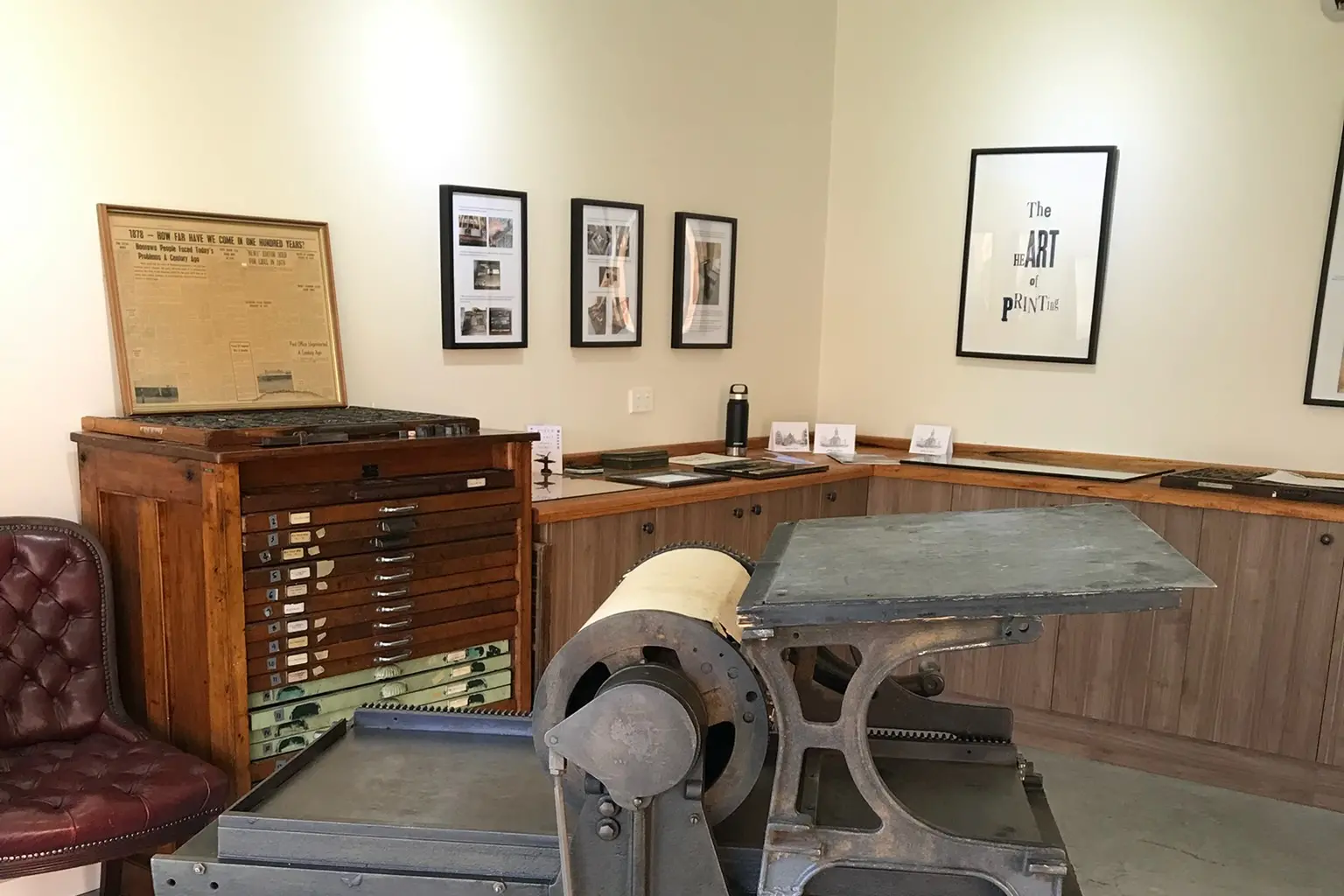
The original press itself has since found a new home in the Boorowa Museum Print Studio. Sold to an artist, who later bequeathed it back to Boorowa, the press is now housed there in good working order, where visitors on guided tours can still see it in action — a working link to the building on Pudman Street it once filled with the sound and smell of print.