
PHOTO
66939.0
Leaders from across government, industry and community gathered in Canberra this week for the THRIVE 2026: Powering Regional Prosperity forum, with a focus on the future of regional growth.
Hosted by Regional Development Australia Southern NSW & ACT (RDASNA) at the Shine Dome, the event marked the official launch of the Southern NSW & ACT Regional Vision – THRIVE, a framework designed to guide investment, policy alignment and regional development.
The Vision responds to key challenges facing the region, including housing availability, workforce shortages, infrastructure constraints and climate resilience, while also identifying opportunities in renewable energy, advanced manufacturing, tourism and the circular economy.
RDASNA Chair Rowena Abbey OAM said collaboration would be central to achieving long-term outcomes.
“Regional prosperity is built through partnership — across government, industry and community,” she said.
The Vision provides an evidence-based, region-wide approach aimed at improving coordination between governments, industry and investors, and moving away from fragmented decision-making.
RDASNA CEO Olivia West said the framework represents a significant step forward for the region.
“This Regional Vision brings together data, community insight and strategic priorities into one coordinated framework — ensuring that investment, policy and planning decisions are aligned and delivering real impact,” she said.
The Southern NSW and ACT region is home to more than 760,000 people and is projected to grow by more than 20 per cent over the next 25 years, increasing demand for housing, infrastructure and services.
Despite relatively low unemployment, workforce shortages continue across key sectors including healthcare, construction and essential services, reinforcing the need for coordinated workforce and skills development.
The forum featured a series of panel discussions and keynote presentations focused on innovation, workforce development, investment and liveability.
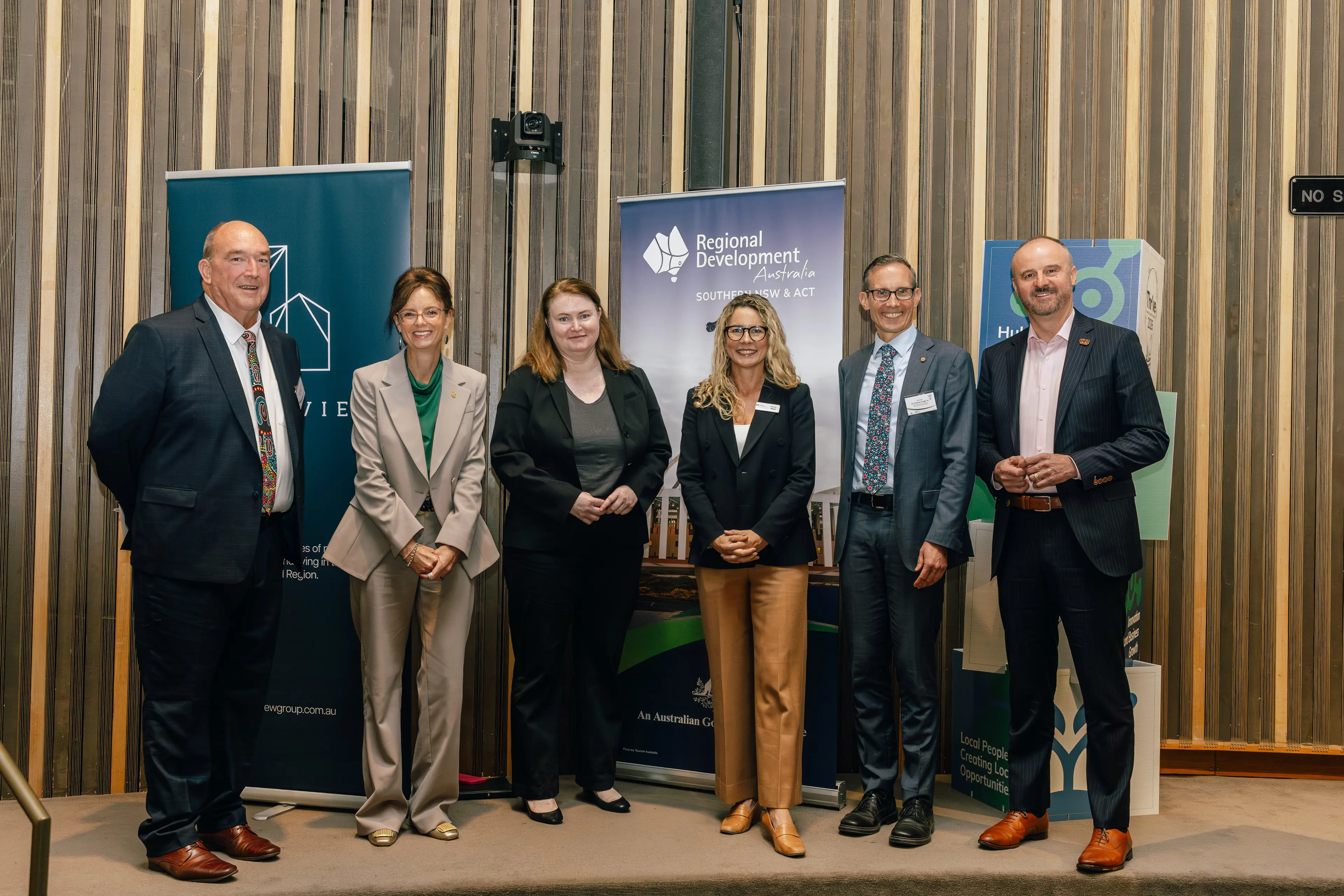
The Leadership Panel brought together senior representatives from across jurisdictions, including Andrew Barr MLA – ACT Chief Minister & Minister for Economic Development, Dr Andrew Leigh MP, Assistant Minister for Productivity, Competition, Charities and Treasury, Tara Moriarty MLC, Minister for Agriculture, Regional NSW and Western NSW, Steph Cooke MP, NSW Shadow Minister for Water and Shadow Minister for Crown Lands, and Russell Fitzpatrick, Mayor of Bega Valley and Chair of Canberra Region Joint Organisation of Councils. Speakers emphasised the need for greater alignment between policy, investment and how regions function in practice.
“Being so close to Canberra, THRIVE provided a valuable opportunity for regional leaders like myself, along with stakeholders from NSW and the ACT, to collaborate on some of our most pressing shared challenges, including housing and workforce shortages,” Steph Cooke MP said.
“No single level of government or individual advocacy group can solve these issues alone. It will take a coordinated, sustained effort at all levels to deliver meaningful outcomes for regional communities,” she said.
“As the NSW Shadow Minister for Water, one of the most significant challenges I see is ensuring we have the enabling infrastructure needed to support housing development. We can attract workers to regional NSW, but if we can’t house them, we can’t retain them. Without reliable water and essential services to support growing communities, that development simply cannot proceed,” Ms Cooke added.
The Vision is built around six strategic pillars: transport and logistics; hubs of regional development; resilience and sustainability; innovation and business growth; vibrant populations and liveability; and employment and training.
The event also included a leadership breakfast and an evening networking function, providing opportunities for further discussion and collaboration among attendees.
RDASNA said insights gathered throughout the forum, including participant feedback, will help inform its ongoing regional advocacy and work.
The organisation is encouraging policymakers, investors and community leaders to engage with the Vision as it moves into its next phase.