
PHOTO
71379.0
Local op-shop volunteers are asking residents to think before they donate, as growing volumes of unwanted clothing continue to move from local wardrobes into charity shops, rag bags, textile collection services and waste streams.
Boorowa Op Shop volunteer Lyn Diskon said the shop received “stacks and stacks” of clothing, but the issue was not simply the amount arriving at the door.
It was the condition of the clothing, how it had been packed, and whether it could realistically be sold, repaired, repurposed or reused.
“Clean and in good repair — that’s basically what makes a good donation,” Ms Diskon said.
The message comes as cheap, mass-produced fashion continues to change the way people buy, wear and discard clothing.
National figures show op shops are dealing with part of a much larger problem. The Australian Fashion Council’s Seamless program says Australians buy an average of 56 items of clothing a year, while about 200,000 tonnes of clothing goes to landfill annually.
Across Australia, op shops have become a key part of the reuse economy, but at a local level it is volunteers who sort through the end result of household clean-outs, changing shopping habits and overfilled wardrobes.
Ms Diskon said the Boorowa shop received far more women’s and children’s clothing than men’s clothing.
“We get a lot more ladies’ and kids’ clothes than men’s. Blokes tend to wear their stuff till it falls off them,” she joked.
For op shops, the real work begins after donations are dropped off.
Every bag has to be opened. Every item has to be checked. Volunteers then decide whether clothing is ready for the racks, needs washing, can be repaired, can be cut up for rags, can be passed on through another reuse pathway, or is not suitable.
Ms Diskon said dirty clothing remained one of the biggest frustrations for volunteers.
“Please wash it first,” she said.
“It’s not fair on volunteers to have to handle somebody else’s dirt.”
She said a clean item with a small fault could still have value, particularly if it was something the shop needed.
A men’s jumper with a small hole, for example, was recently repaired rather than discarded because men’s clothing was in short supply.
But dirty, smelly or badly worn items often created extra work and cost in washing them before volunteers could even make that decision.
Ms Diskon said the Boorowa shop worked hard to keep as much as possible out of landfill.
Suitable non-synthetic fabric can be cut into rags and sold, while surplus clothing that cannot be used locally may be collected by One Ten Enterprises, a textile reuse company that buys surplus clothing from Australian charities.
“Very little goes to landfill,” Ms Diskon said.
The rag cutting has also created a small community connection, with people from Burrowa House visiting the op shop with a carer to help cut fabric as a social outing and a way to contribute.
Ms Diskon said that showed unwanted textiles could still have value, even when they were no longer suitable for the shop floor.
However, she said the condition of donations still mattered.
Even clothing intended for rags or textile reuse collection needed to be clean for volunteers to handle.
One practical way the community could help was by sorting donations before dropping them off.
Clean, good-quality clothing that was ready to wear could be kept together for the shop floor, while clean but worn, faded or unsuitable clothing could be separated for other uses such as rags or collection.
The point was not to create more rules for donors, but to make people more aware of what happens after items leave their homes.
A bag of clean, wearable clothing can move quickly onto the racks and raise money for the shop.
A bag of clean but worn clothing may still be useful if it can be cut into rags or passed on through another reuse pathway.
A bag of dirty, smelly or poorly sorted clothing creates extra work for volunteers and may reduce the chances of items being reused at all.
Ms Diskon said op shops had also changed over time.
Once seen mainly as places for people who could not afford to buy new, they are now used by a much broader range of shoppers.
People come looking for affordable clothing, household goods, shoes, toys, kitchenware, antique pieces and sometimes brand-new items still carrying their original tags.
She said when new items arrived with tags still attached, they were usually priced well below the original retail price.
That shift has made op shops an important part of the local reuse economy.
They help keep useful items in circulation, offer affordable options for households, raise money for local causes and give shoppers an alternative to buying everything new.
But the increased popularity of op shopping does not remove responsibility from the people donating.
The issue is also not limited to clothing.
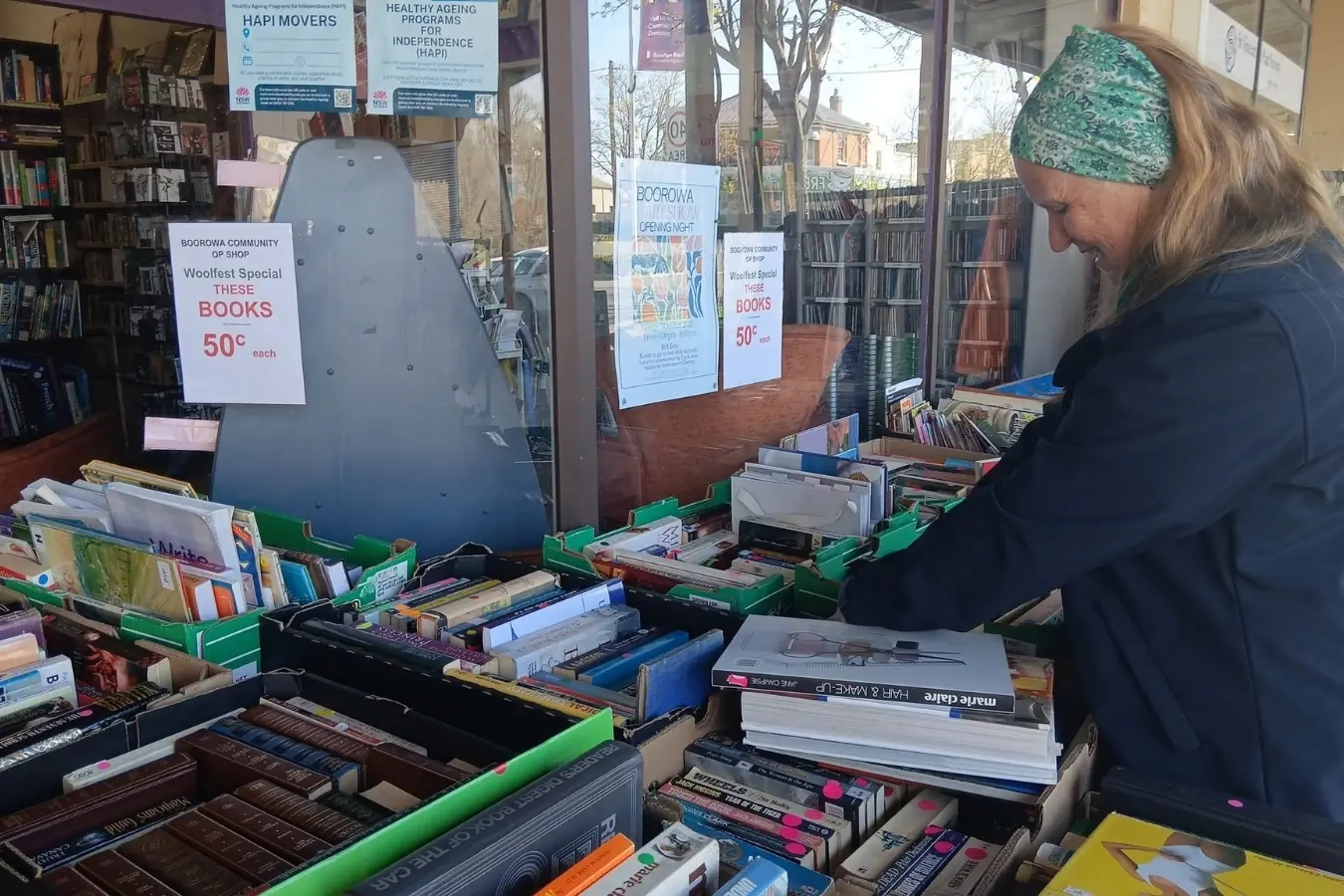
Heavy donations, particularly books and household items, can be difficult for volunteers to manage when they are packed into large boxes.
“People need to think about the other end,” Ms Diskon said.
“A lot of people working in op shops are older people, and very heavy things can be an issue.”
She said books were better packed into smaller boxes, such as wine boxes, rather than large cartons that become difficult to lift.
The message for the public is practical: wash clothing before donating it, check that items are in reasonable condition, pack heavy goods into manageable boxes and think about whether someone else would genuinely want to use what is being passed on.
If clothing is clean and ready to wear, it may be suitable for the racks.
If it is clean but no longer suitable to wear, it may still have value as rags or through textile reuse collection.
If it is dirty, smelly or unsafe to handle, it should not be left for volunteers to deal with.
The wider clothing waste issue is also being highlighted locally through growing interest in reuse, repair and upcycling, including the Boorowa Irish Woolfest Upcycle Fashion Contest.
But for op shops, the first step is much simpler.
Before unwanted clothing is dropped off, residents are being asked to think about the person who has to open the bag, sort the contents, lift the box and decide what happens next.
A better donation does not just help the shop - it helps keep useful items in circulation, reduces waste and shows respect for the volunteers doing this important work.