PHOTO
Reiteraiting her stance of standing with local primary producers, Member for Cootamundra Steph Cooke has called on the NSW Government to thoroughly consult stakeholders before any firearm and licence holder regulations are drafted.
Ms Cooke believes the December 2025 firearms legislation was rushed through without consultation with key bodies and without the support of her party, the NSW Nationals.
"These laws have been heavily criticised by primary producers, hunters, competitive shooters, and regional communities as poorly written and unworkable," Ms Cooke said..
"Last week, the Commonwealth Government passed its own legislation, including a gun 'buyback' scheme, which has caused further distress to law abiding firearms owners."
Ms Cooke believes that with the NSW Government yet to release the regulations that specify how the new laws will be enacted and enforced, there is time to engage with stakeholders and rural communities.
"This firearms legislation is completely impractical for effective pest mangement, and the future of sport shooting in the state of NSW," Ms Cooke said.
"Without regulations that reflect the realities of our rural communities, our volunteer gun clubs will face an impossible administrative burden, our licence holders will be forced to pay more for less, and our state's biosecurity will be jeopardised."
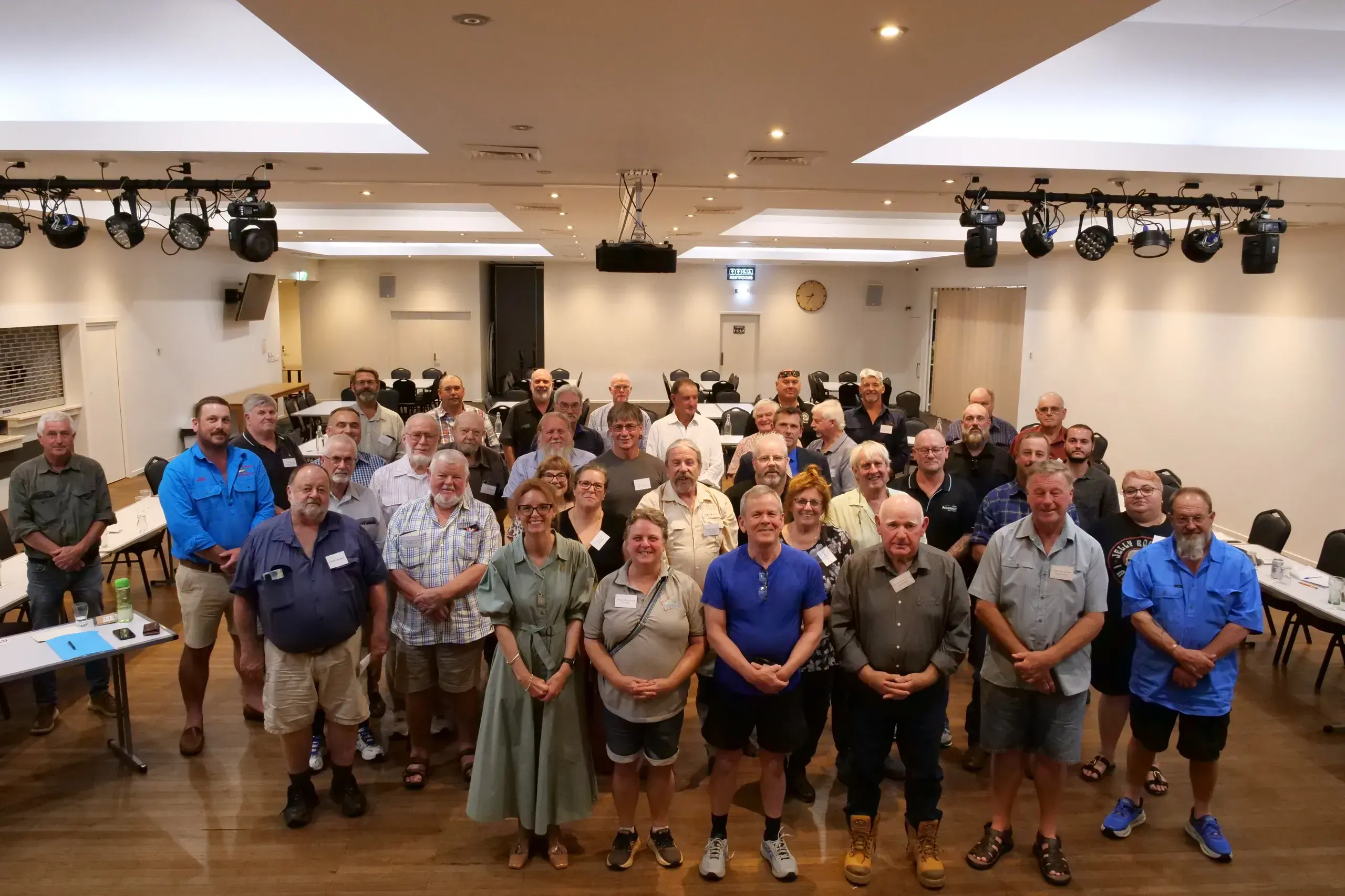
Boorowa and Grenfell Gun Clubs were among organisations across the Cootamundra electorate who met with Ms Cooke in a roundtable.
"Representatives, many of whom require firearms for agricultural or hunting purposes, in addition to sport shooting, highlighted the unworkable nature of the legislation while identifying ways in which the regulations could be written to work with firearms owners, rather than against them," Ms Cooke said.
"These are the types of disucssions that members of the NSW Government should be having to ensure the regulations are actually fit for purpose.
"No matter what your opinion is about firearms ownership, the new legislation will fall to work in practice unless the regulations address the glaring issues being raised by gun clubs and firearms owners."
Ms Cooke wished to thank the gun clubs for sharing their insight and wanted to reaffirm her commitment to combating the legislation.
Cooke calls for no cap if reasons are genuine
Member for Cootamundra has said she doesn't believe that the proposed firearm legislation should restrict firearm owners to a 10 gun cap if they have multiple and genuine reasons for ownership on their licence.
Ms Cooke is concerned the legislation will limit recreational gun licence holders to a maximum of four firearms and a maximum of 10 for primary producers, pest controllers and sports or target shooters.
"This is entirely unworkable and is further compounded by the law's new mandate of gun club membership for all licence holders," Ms Cooke said.
According to Ms Cooke different animals, including pest animals, require a particular calibre of firearms for humane management.
"Farmers and hunters may use one firearm for close range pests and another for long distances," Ms Cooke said.
"Some oen two of the same calibre in case one is temporarily unusable and awaiting maitenance.
"Many compete in multiple disciplines, each requiring a specific firearm type and are subject to strict competition rules.
"The firearms cap does not account for licene holders who require firearms for primary production, hunting, and or competition," Ms Cooke said.
"If you add in that some firearms owners also have private, state and federal government contracts, this means some licenced shooters have five or even six genuine reasons, all of which require additional firearms."
Ms Cooke said that though she has heard of a potential exemption to the rules for elite shooters she questioned how someone would be able to train to become an 'elite' athlete if they aren't able to access the equipment they need.
"At the very least, the regulations must not restrict firearms owners to a 10 gun cap if they have multiple, genuine reasons listed on their licence," she said.
Ms Cooke also has concerns over primary producers potentially needing to join gun clubs under the new laws.
"This would involve paying an annual membership fee, acquiring new equipment to participate in competitions and competing in a minimum number of shoots each year, depending on the discipline, to meet their participation requirements," Ms Cooke said.
"The new legislation penalises farmers far beyond restricting the number of firearms they can own.
"The laws fail to consider the tyranny of distance faced by primary producers who may live hours away from the nearest club, and the cost burden associated with participating in the sport, which they may have no interest in."
Ms Cooke shared that clubs that are already experiencing an influx of membership enquiries are struggling to see how they can organise enough shoots to meet participation requirements.
"Rural gun clubs are predominantly run by volunteers with little administrative or financial support from the NSW Government," Ms Cooke said.
"With thousands of primary producers and hunters now required to join, the new laws create a signigicant administrative burden for clubs, which lack the manpower and facilities to cater to an influx of new members."
Ms Cooke expressed that vetting processes are of significant concern for clubs who are yet to receive advice from the state government.
"There is no clarity about the consequences a club may face if a bad actor falls through the cracks, or if a member were to do the wrong thing while in possession of a firearm," she said.
"The pressure of endless paperwork for compliance and new memberships could ultimately cause committee members to leave, and clubs to collapse."
According to Ms Cooke many of the electorate's gun clubs lack the infrastructure that metro clubs take for granted, including dedicated female and disabled toilet facilities, room to accommodate an influx of competitors and computer/internet connection.
"This reduces the ability of smaller clubs to host large enough shoots to meet everyone's participation requirements, forcing volunteers to organise and host more frequent events," Ms Cooke said.
The local member is also concerned about the further financial burden that will be placed on licence holders and the NSW Firearms Registry.
Under the new law firearm owners need to reapply for their licence every two years as opposed to the five years, which Ms Cooke said is another financial burden to licence holders.
"This means that the NSW Firearms Registry will receive approximately 900 more licence applications each week, raising significant concerns regarding turnaround times and the Registry's capacity to adequately assess each application," Ms Cooke said.
"The new two-year renewal requirement will demand a greater investment in the NSW Firearms Registry, which means taking away funds from other areas of state importance.
"NSW can literally not afford the Government introducing these new laws until it can provide a transparent plan about how it intends to pay for them."
Ms Cooke has also flagged the fate of heirloom and ceremonial firearms which will be subjected to the new caps.
"Many firearm owners have inherited guns of sentimental value or possess firearms for ceremonial purposes, such as Light Horse troop members," Ms Cooke said.
"While most of these firearms are kept as collectors items and not fired, it is understood that these items will be subjected to the NSW Government's new firearms cap."
Ms Cooke said this is a devastating blow to those in possession of heirlooms.
"And who may be forced to choose between these sentimental items or keeping their tools of trade," Ms Cooke said.
"These include firearms used by Australian soldiers in wars as early as the Boer War, passed down through the generations.
"Joining a collector's club or decommissioning these items just so that they aren't confiscated or 'brought back' by the federal Government, which never owned them in the first place, is not a solution for all, nor should it have to be."