
PHOTO
75344.0
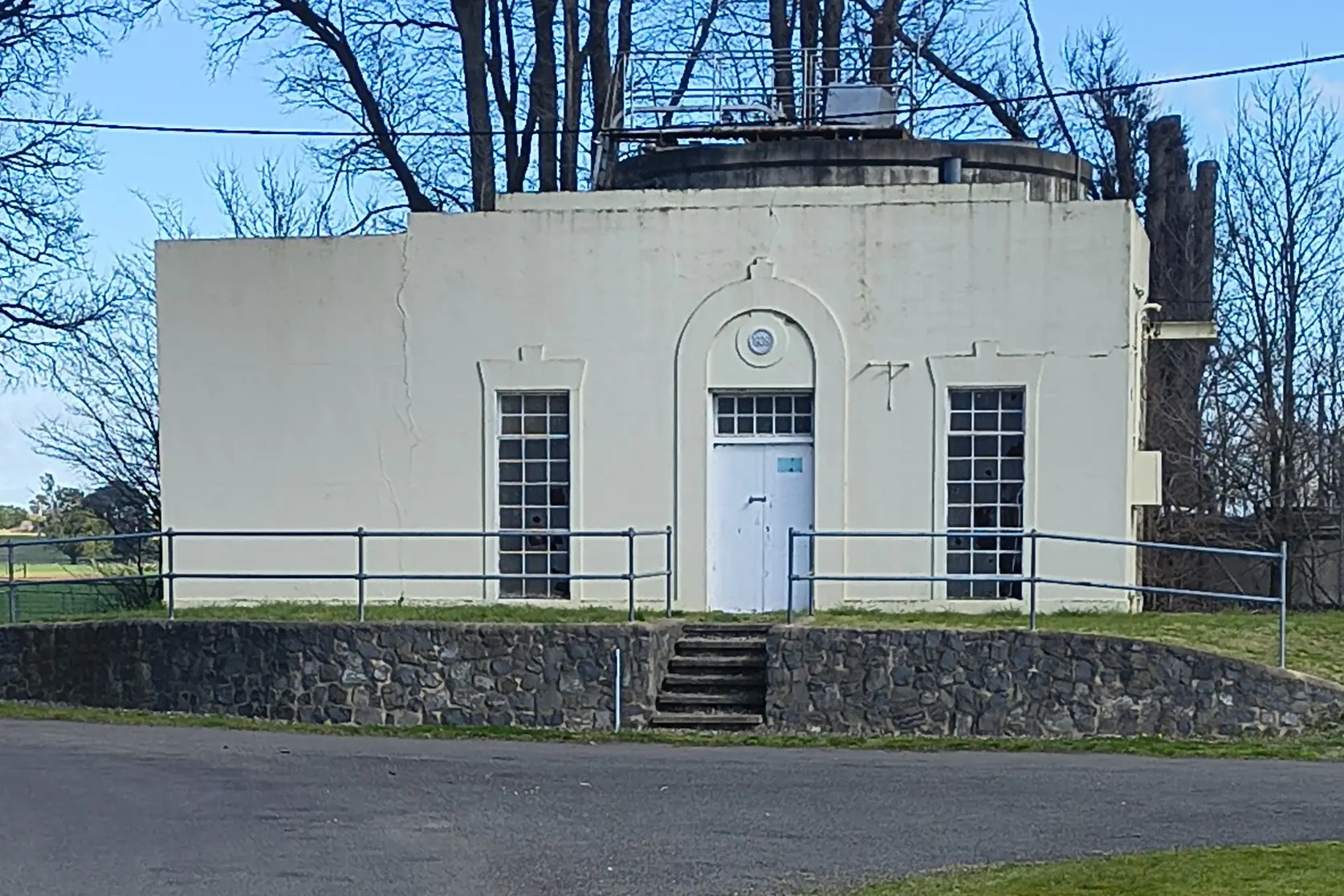
The old filtration plant on the corner of Scott and Pudman streets is not part of Boorowa's Shamrock Trail, but it stands as one of the town's more historically significant buildings in its own right.
Condemned, with broken windows and doors, it is what remains of a Depression-era scheme that gave Boorowa its first reliable water supply.
Boorowa's water troubles date back to free river water supplied until 1966, backyard wells, and a weir built across the Boorowa River in 1902, which cracked within five months and never fully met demand.
In 1936, with Depression relief labour on offer, council put a new scheme to a poll.
It passed 402 votes to 74, and a filtration plant was built at Scott and Pudman streets, pumping treated water to houses and residue to a tank on the hill above town.
Trenching began in July 1937, but the connection was not switched on until September 1940.
Demand quickly outstripped supply, and Boorowa's first water restrictions followed in 1947.
A larger scheme proposed in the 1980s was rejected by 90 per cent of residents surveyed in 1988.
Today, the town still draws from the Boorowa River and two bores, treated at the Boorowa Water Treatment Plant, built in 1994.
The same hard, mineral-rich water noted by the earliest well diggers remains an issue: about 18 per cent of residents drink tap water regularly.
Dry, hot weather pushed the town to Level 2 restrictions on 23 January 2026, easing to Level 1 by 10 March after rain.
The long-term fix is the Harden to Boorowa pipeline, connecting the town to the Goldenfields Water County Council network, which draws Murrumbidgee River water at Jugiong.
Design is essentially complete, costed at about $56 million, with detailed design due to be finalised in June 2026.
Steph Cooke, the Nationals member for Cootamundra, has called on the NSW government to commit money in the 2026 budget, saying "this project is ready to move to construction".
"What is missing is a clear funding commitment from the NSW government," Ms Cooke said.
The filtration plant still stands on that quiet corner of Scott and Pudman streets today, condemned and empty.
But the question it was built to answer, how a town on a small, unreliable river secures enough water to grow, is exactly the one Boorowa is grappling with again.