
PHOTO
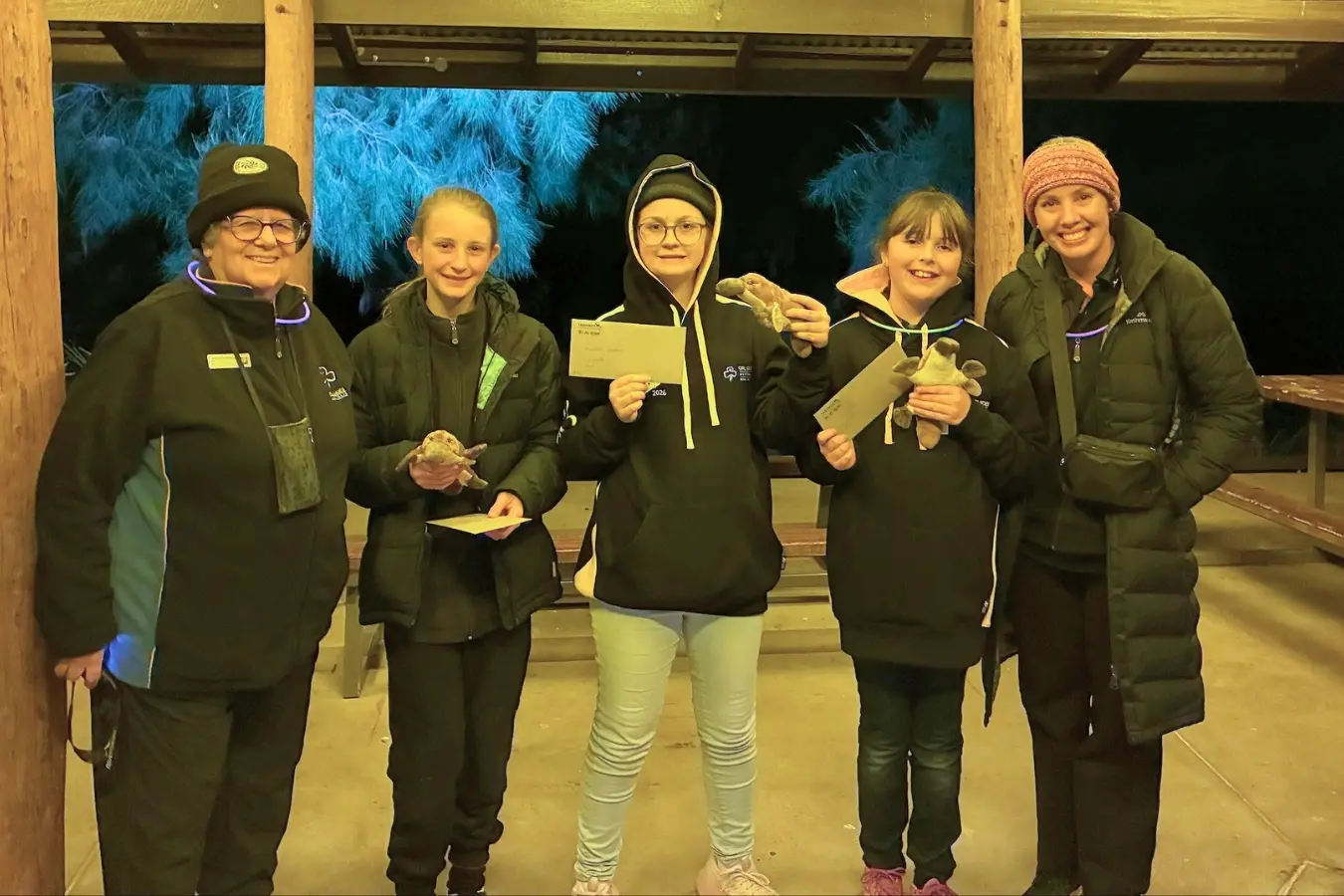
Three Young Girl Guides did more than sleep beside roaring lions at Taronga Western Plains Zoo Dubbo — they also raised more money than any other Guide District attending the Great Guide Sleep Out.
Matilda, Mackenzie and Thea raised a combined $1126 for conservation of the critically endangered Regent Honeyeater.
Young District Girl Guide manager Pauline Davidson said all three girls had made an outstanding effort.
“They raised the most of any Guide District present, but more importantly, they gained an understanding of the importance of the current breeding and protection Project of the Regent Honeyeater at the Dubbo Zoo,” Ms Davidson said.
Matilda raised $605 after initially setting herself a goal of $100, drawing support from family and friends, completing odd jobs and contributing some of her own pocket money.
Mackenzie raised $332, while Thea exceeded her $150 goal to raise $189, including $17 she earned through extra chores.
Guide leader Pip Bryant-Hill said seeing the girls recognised for their efforts was a proud moment.
“I am so proud of their fundraising efforts; together, they raised over $1000 for the conservation of the Regent Honeyeater. It was an incredible achievement,” Ms Bryant-Hill said.
“Pauline and I really enjoyed seeing how proud they were when they were presented with their rewards, which included a plush platypus, zoo entry and animal encounter.”
Alongside the fundraising came an opportunity to learn why the bird needs help.
The Regent Honeyeater is a critically endangered native bird once much more widespread across south-eastern Australia.
Taronga’s conservation program breeds Regent Honeyeaters in captivity with the aim of strengthening the population and releasing suitable birds back into the wild.
More than 400 have been released since 2000, including 49 zoo-bred birds in 2024.
Monitoring has also recorded zoo-bred birds pairing with wild Regent Honeyeaters and producing young.
Taronga Western Plains Zoo Dubbo plays a direct role in that work, with purpose-built breeding, flocking and pre-release facilities preparing birds for life beyond captivity.
Young birds develop flight fitness and social skills before potential release, while wild adults have also been used to help zoo-bred juveniles learn the distinctive Regent Honeyeater song.
Thea said she learned Regent Honeyeaters are yellow and black and face competition from more aggressive birds for food and territory.
“Noisy Mynahs have been taking their food and territory, because Regent Honeyeaters aren’t as aggressive as other birds so can’t defend themselves,” she said.
Matilda described the Regent Honeyeater as “a beautiful looking bird with a beautiful song”.
Mackenzie also came away understanding the species is endangered and that the money raised was helping conservation efforts.
Although three Guides from Young represented only a small part of the 176 participants from 36 Guiding districts, their contribution was anything but small — finishing as the highest fundraising district and helping support work aimed at returning one of Australia’s rarest birds to the wild.