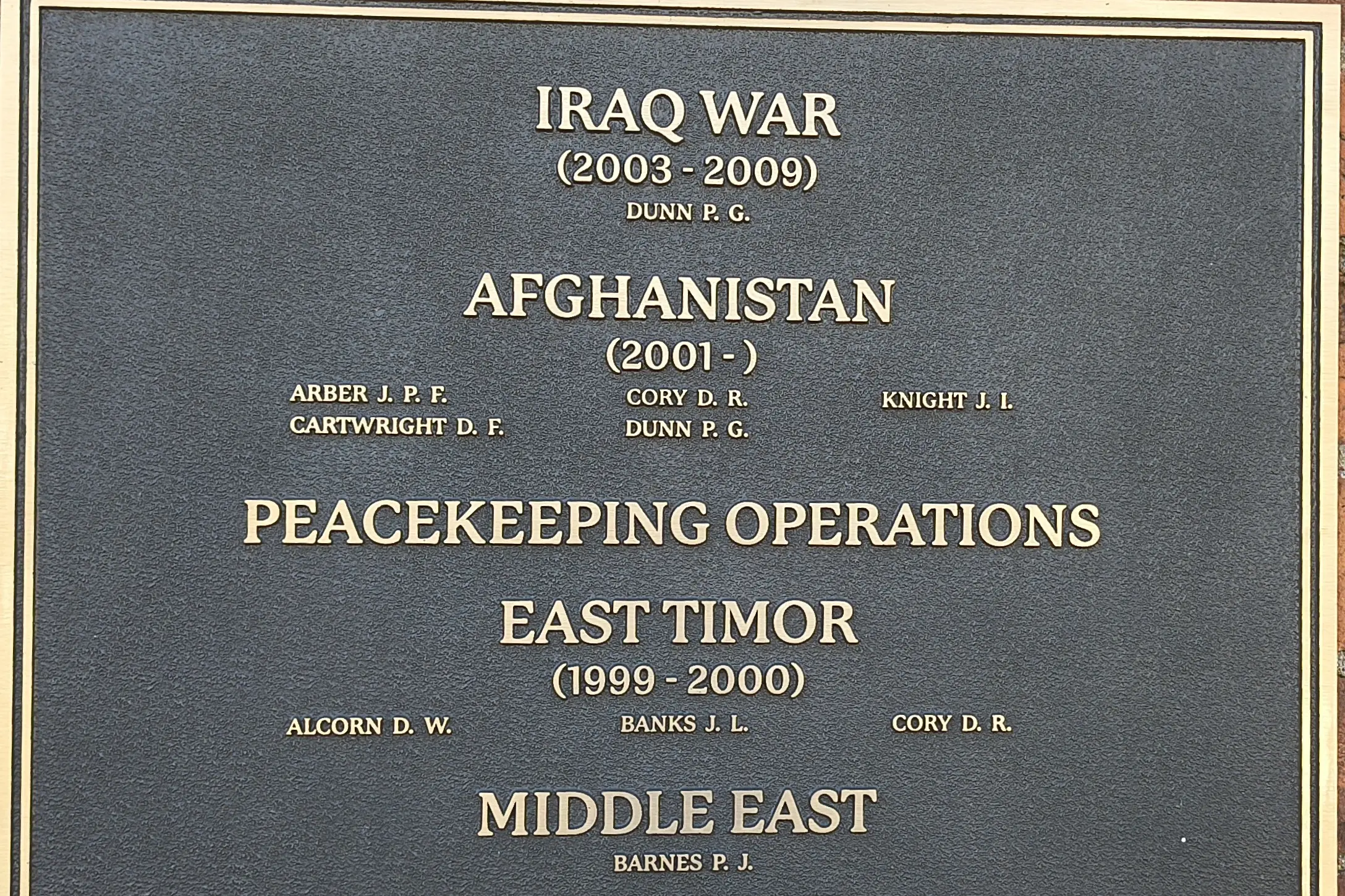
There are events in life you remember exactly where you were when they happened. For me there are four: when Princess Diana died, when the Berlin Wall fell, when Steve Irwin died, and when the September 11 attacks occurred. Tomorrow, 11 September, marks 25 years since two planes struck the World Trade Center in New York, a third hit the Pentagon, and a fourth crashed in a Pennsylvania field after passengers fought back against their hijackers. Almost 3,000 people were killed that day. For me it is especially vivid. I was on deployment with the RAAF at RMAF Base Butterworth in Malaysia for Exercise STARDEX, a combined Australian and Malaysian exercise. I was a communications technician, and had just started a shift handover when a colleague, Sian, rang from home to say the World Trade Center had been hit. We thought it was a movie, like Independence Day, then realised it was real, as we watched the second plane hit the towers. The room became numb for maybe 30 seconds, then we kicked into gear and followed procedures. I spent the shift holding the comcentre door open for group captains and wing commanders, as well as Air Vice-Marshal Kerry Clarke, commander of the Five Power Defence Arrangements' headquarters at Butterworth, who found a moment of dry humour amid the tension. "Deano, your arm is going to be extremely tired if you keep saluting everyone who walks through this door, tell them I said you didn't have to." Days later, travel restrictions were imposed, uniforms were banned to and from base, and we could no longer use RAAF vehicles or travel alone. I spoke to family back home the following day. Looking back, there was a strange sense of safety at the time. I wasn't the only one who found the day impossible to look away from. David Robinson, a Vietnam veteran from Young, recalled staying up until about 2am watching the coverage, unable to sleep. "I was mesmerised," he said. Paul Corcoran, a teacher at St Joseph's Primary, was flying home to Sydney from New York via Hawaii when his plane taxied back to the terminal and sat for about an hour. Landing in Sydney to a terminal lined with police and security, and crew asking Boston or Dallas passengers to identify themselves, he sensed something serious. The scale of it hit him in the airport lounge, watching the towers fall on television. "It was a shocking sight," he said. Clive Shepherd, a former Royal Australian Navy lieutenant commander then instructing at the Saudi Air Force Academy, watched the second plane hit live on television after finishing work. Security concerns for expatriate staff rose sharply. "Tensions stayed high for a couple of weeks," he said, before he took leave. The attacks led directly to the wars in Afghanistan and Iraq, and the toll on those who served is significant. More than 40,000 Australian Defence Force personnel served in those operations since 2001, and 41 died in Afghanistan alone. Many more still bear the physical and mental scars of that service. Boorowa's own war memorial carries a direct connection: among the names listed under Afghanistan (2001–) are Arber, Cartwright, Cory, Dunn and Knight, and under Iraq War (2003–2009) is Dunn. Twenty-five years on, that day remains close enough that many still carry their own version of where they were. As the anniversary approaches, it is worth taking a moment to remember, and perhaps to share those memories with a neighbour who was there too.