
PHOTO
72136.0
By KAREN SCHAMBERGER – Young Historical Society
At Camp Hill the original Court House, Lock Up and a third building were burnt down or damaged during the miner’s attack on the Police Camp during the Lambing Flat riots on 14 July 1861.
According to the archaeological work undertaken by Bec Parkes of Lantern Heritage in 2022, a new Court House and Lock Up as well as further buildings to replace the canvas tents were built at Camp Hill in 1862.
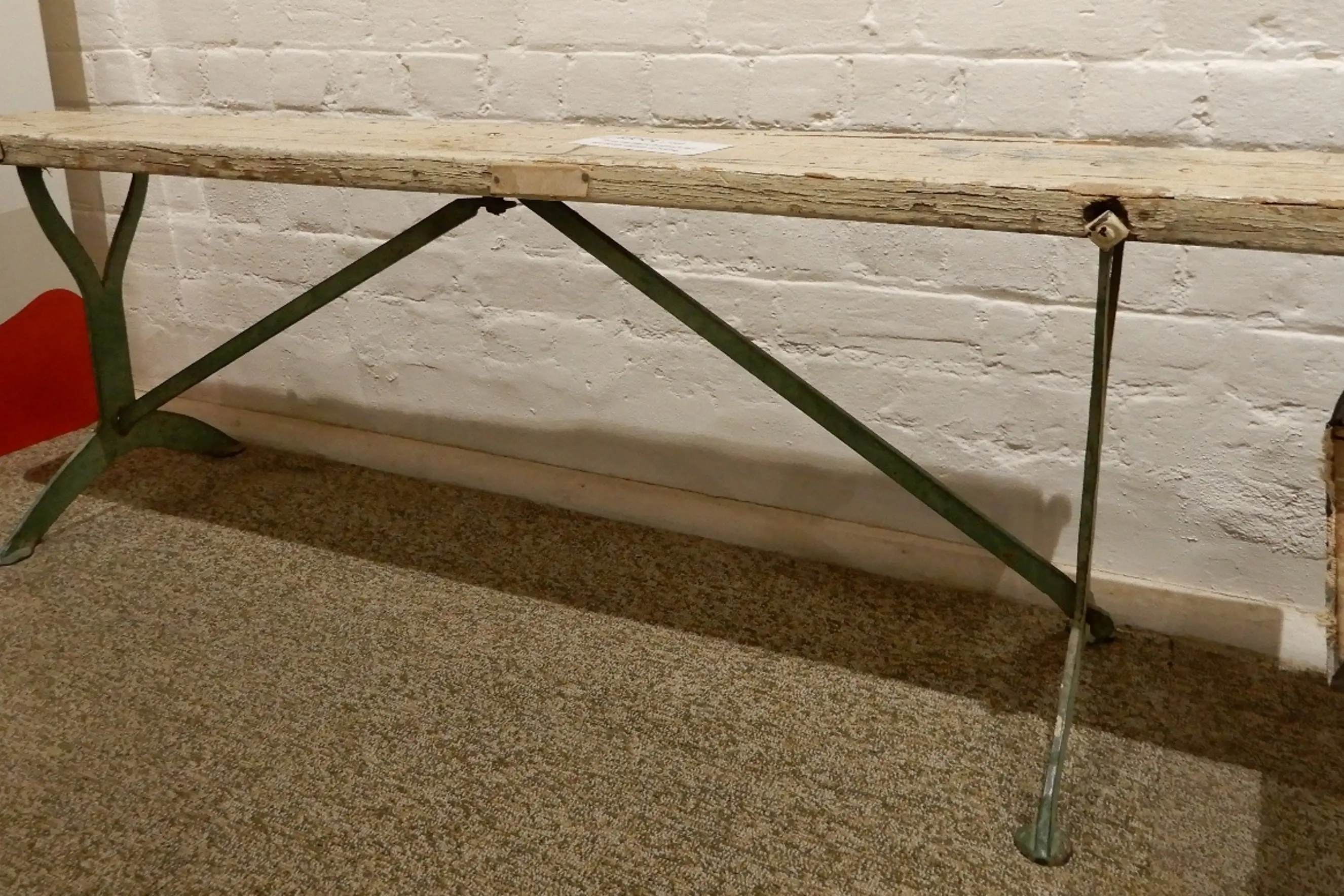
Aboriginal trackers huts were also built on the south-east side of the camp and the Young Historical Museum’s Aboriginal tracker’s stool is from one of these huts.
Aboriginal trackers had been used since the early days of the NSW colony to track escaped convicts, stolen cattle or persons lost in the bush.
Once the colonial government passed the NSW Police Force Act 1862, Aboriginal trackers ‘were used by the police in the course of general policing and the maintenance of law and order.’
According to historian, Michael Bennett, sometimes trackers did pursue Aboriginal people but they ‘were not involved in inflicting violence and death upon those communities.’
They played an essential but often overlooked role in policing. Most are not named in historical sources.
They were at the bottom of the pay scale, earning two shillings sixpence per day which was less than half a constable’s wage. In NSW their numbers peaked in 1886 and then declined through the early the 20th century.
While Captain Battye’s request for Aboriginal trackers to help him at Young was refused in March 1862, in mid-July he left Young with two Aboriginal trackers to assist Sir Frederick Pottinger chase bushranger Frank Gardiner and his gang in the aftermath of the Escort Robbery on the Lambing Flat road near Forbes.
Besides chasing bushrangers, Aboriginal trackers were also used to assist police in catching horses that had escaped their owner’s property.
One Aboriginal tracker was used by John Walmsley, senior constable, to follow the bare-foot prints of John Shoard, who had run away from family at Milong on the road leading to the Weedallion Mountains in 1882.
In 1898, Aboriginal tracker Harry Cleveland and Constable Monday were despatched to the location of two farm fires at Marengo on the properties of Joseph Crowe and Patrick Kearins. Cleveland, ‘though his duties were rendered very difficult owing to the number of people about the fire obliterating the tracks, did some very creditable work.’ In 1921, Thomas Montague ‘Monty’ Byrne worked with Constable Mann to search successfully for 74 year old Mary Wiggins who did not return home from bringing the cows in for milking one morning.
‘Monty’ had joined the Police Force as a tracker in 1900 and served at Young for just over 20 years before transferring to Goulburn where he died in 1933.