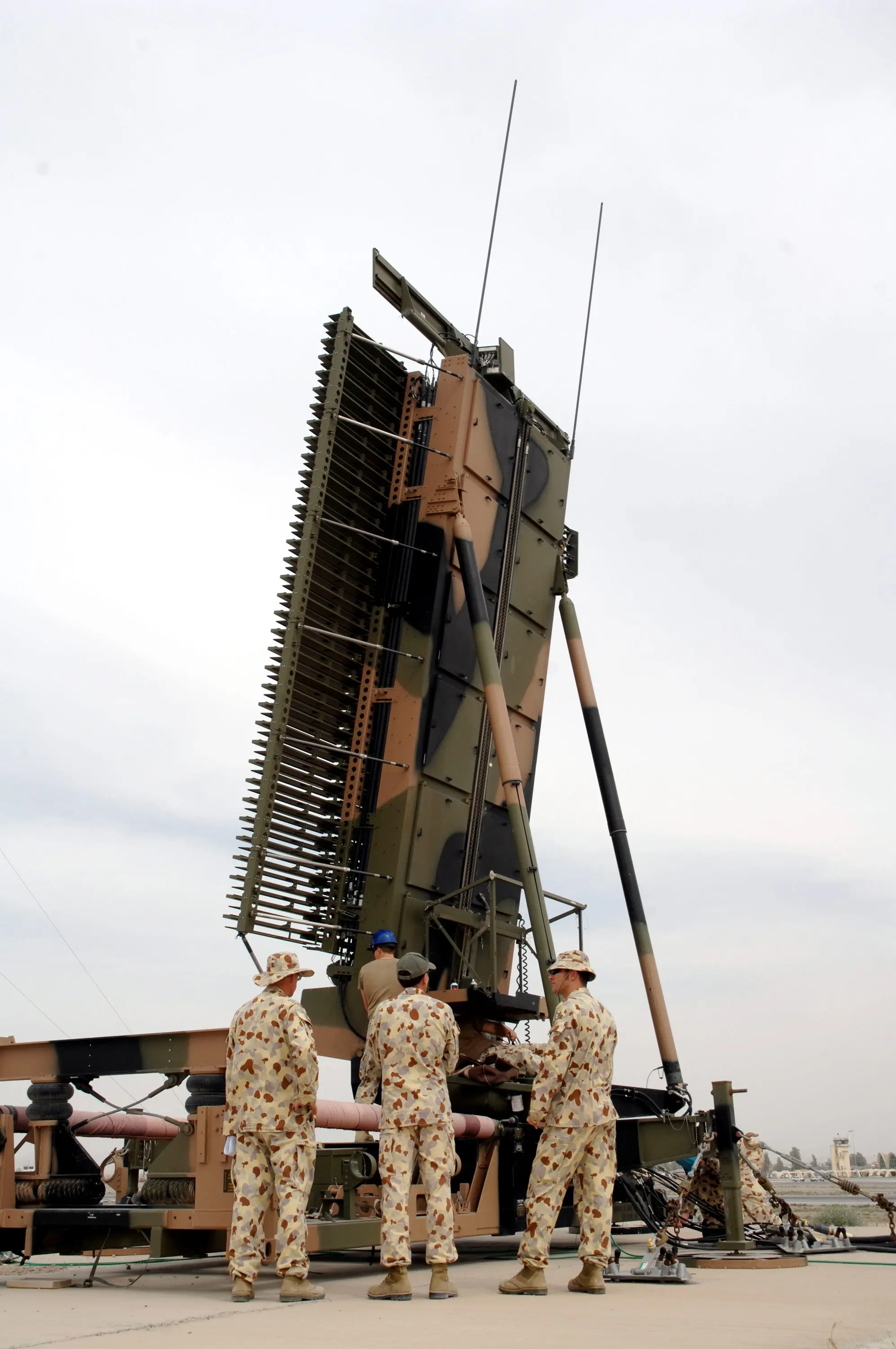
TPS-77 RADAR Deployed to Camp Palomino, Kandahar Afghanistan.SGT Brent Tero Clocks at Camp Palomino Command Post, Kandahar Afghanistan PHOTO LAC ALAC Aaron Curran Twenty-five years ago this month, Australia committed its forces to what would become the nation's longest war. Operation Slipper, the Australian Defence Force (ADF) contribution to the war in Afghanistan, was established on 11 October 2001, a month after the September 11 terrorist attacks in the United States. Over the next two decades, more than 35,000 Australians served in Afghanistan or in support roles across the Middle East. The Roll of Honour lists 47 ADF personnel who died, and 263 were wounded. A national commemorative service marking the 25th anniversary was held at the Australian War Memorial (AWM) in Canberra on Sunday 11 October. Boorowa's names Five names are listed under Afghanistan on the Boorowa War Memorial: James Arber, Darren Cartwright, David Cory, John Dunn and Joshua Knight. Two of them served in more than one conflict. David Cory also served in East Timor with the International Force East Timor (INTERFET) in 1999, and John Dunn is also listed on the memorial for the Iraq War. Not every veteran wants to talk about their time in Afghanistan, and Boorowa News respects that. For some, seeing their name on the memorial is enough. Eyes on the sky over Kandahar Much of the public focus has been on the Army's role in Afghanistan, from special forces operations to the mentoring task in Uruzgan Province. The Royal Australian Air Force (RAAF) was also there throughout. In a previous life I served with the RAAF Control and Reporting Centre at Kandahar Airfield in southern Afghanistan from November 2008 to February 2009. The centre was run by No. 41 Wing from Camp Palomino, a small Australian compound on the sprawling coalition base. It was the only RAAF wing to deploy to Afghanistan as a whole unit. It was also the first RAAF RADAR deployment on operations since World War II. The centre managed the airspace over southern Afghanistan 24 hours a day, seven days a week. It tracked and coordinated coalition aircraft, including air-to-air refuelling and air support for Australian and coalition troops on the ground. I was deployed as a communications electronics technician, where I specialised in the data processing and display systems and the communications systems the controllers used to track coalition aircraft and talk to their crews. We ran 24-hour operations, split into two 12-hour shifts, most of the work was preparing the systems for each mission, then troubleshooting and fault-finding, so the controllers could do their jobs. My tour covered the Afghan winter, when rocket attacks on the base were less frequent. There were still some at the start and end of my deployment, and two have stayed with me: The first came during a phone call home. The early warning rocket alarm went off, and my wife asked what that noise was. I told her it was just the rocket alarm, and then we lost communications. For the next 24 hours I tried everything to contact her to tell her I was OK. The second came while I was on sentry duty at the gate to Camp Palomino. The rocket alarm went off and I hit the ground, as we were told to do. I heard the whistle of the rocket fly overhead, then saw it land about 15 metres in front of me, bounce, and stop on the main runway. Then there was complete silence. It seemed like a minutes, but it would only have been a few seconds. Then I realised it hadn’t exploded, so I called it in to the command post. I returned to the region from November 2014 to February 2015 on Operation Okra, the Australian Defence Force mission against Islamic State that was run from the Middle East. My deployment spanned the end of Operation Slipper on 31 December 2014 and the start of Operation Highroad, the NATO-led training and advisory mission that followed, on 1 January 2015. The hardest question Australia’s final personnel left Afghanistan in June 2021. Within two months, the Taliban had retaken Kabul. For me, and for many veterans, the hardest thing to understand is that after 20 years in Afghanistan, the moment the coalition moved out, it essentially went back to how it was. It can feel like those 20 years were for nothing. And now, with the current conflict in the region, it looks like there will be deployments back there. Other veterans point to what was achieved in those two decades. Millions of Afghan girls went to school, and in August 2021 Australian aircraft evacuated about 4100 people from Kabul, many of them Afghans who had worked alongside Australians. Many veterans say simply that they did the job they were sent to do and looked after their mates.