PHOTO
73604.0
Local farmers and residents will be invited behind the scenes at the CSIRO Boorowa Agricultural Research Station as expanding trials explore crop productivity, livestock management, soil health and farming’s environmental impact.
The station will hold a free open day on September 2, giving visitors an opportunity to inspect field trials, meet researchers and discuss the issues that could help shape future agricultural research.
The event comes as Boorowa local Gerard Ryan takes on the role of station manager, with a focus on strengthening the station’s connection with the community.
Mr Ryan said managing the facility in the region that shaped him was a particularly meaningful opportunity.
“It presents a unique opportunity to contribute to the region that has shaped me, while supporting research that has the potential to influence agricultural systems well beyond our local area,” he said.
“What makes the role particularly rewarding is the station’s ability to connect scientific research with the people who live and work in the region.”
Mr Ryan said the station also had opportunities to work with schools, Landcare groups and community organisations by providing access to facilities and practical learning experiences.
He said local interest was already evident through phone calls, café conversations and questions about crops and farming practices visible from nearby roads.
“To me, that reflects the value of agricultural research and highlights the important role BARS plays in stimulating curiosity, discussion and innovation within the community,” he said.
CSIRO Agriculture and Food Deputy Director Dr Alison Bentley said research activity at the station was increasing, making it an ideal time to invite farmers and residents onto the property.
“We’re ramping up research at BARS, so it is an excellent time to showcase what we’re doing and to get feedback and inputs from local farmers and stakeholders,” Dr Bentley said.
A major focus is a long-term trial comparing different cropping sequences, farming practices and levels of inputs.
Rather than judging results from a single season, the trial allows researchers to examine how different decisions affect productivity across changing seasonal conditions.
The work aims to provide evidence growers can use when planning crop rotations, managing inputs and assessing less common practices such as intercropping, where two or more crops are grown together.
“Through these trials we can demonstrate a productivity effect in a season, as well as looking at productivity across seasons,” Dr Bentley said.
Large-scale field evaluations are also examining major canola diseases, including blackleg, while the station is multiplying seed from a diverse collection of Australian wheat varieties to support future crop-improvement research.
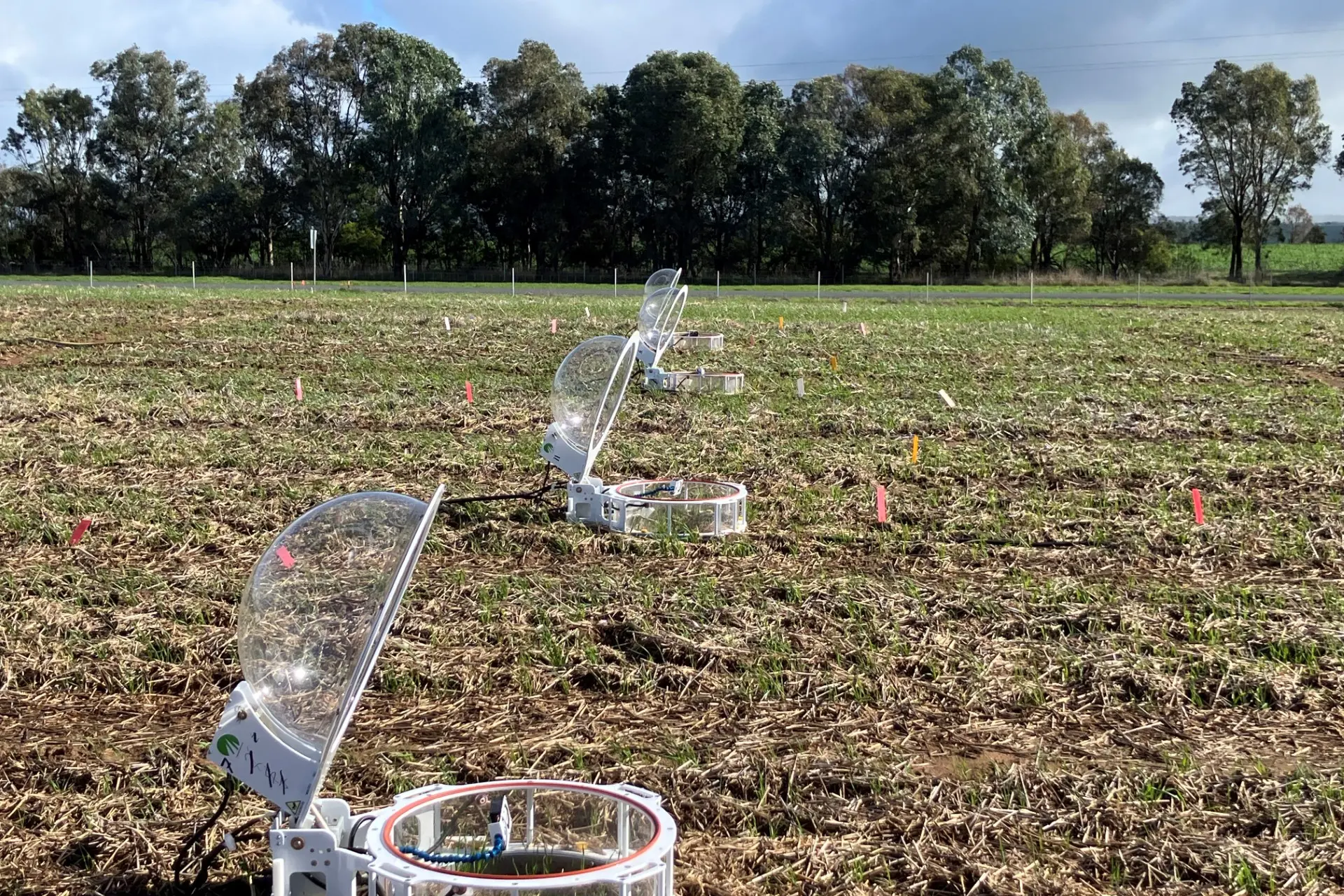
A new field-based system is being established to measure greenhouse gas emissions from cereal stubble under different post-harvest treatments.
Sensors across the property are also collecting detailed soil and water data to support research into crop performance, resource use and environmental conditions.
Livestock research is set to become another growing part of the station’s work.
Cattle are now on the property, with researchers preparing to test virtual fencing technology designed to manage grazing and track animals through electronic boundaries.
Previous CSIRO research in South Australia found virtual fencing could benefit mixed-farming operations while helping protect soil by giving producers greater control over where and when livestock graze.
Mr Ryan said research at Boorowa was focused on supporting the future of profitable and sustainable agriculture.
“While meaningful advances rarely occur overnight, each project contributes to a growing body of evidence that supports improved farming practices,” he said.
The station also offers young people an opportunity to engage with science and technology in a practical agricultural setting.
Its work involves drones, remote sensing, advanced data systems and environmental monitoring, alongside crop and livestock research.
“BARS provides an opportunity to inspire the next generation to consider careers in science, technology and research,” Mr Ryan said.
Farmers and community members are encouraged to contribute ideas by attending field days, open days and workshops or contacting the station directly.
“By maintaining strong connections with producers and the wider community, we can help ensure that future research at BARS addresses the issues that matter most,” Mr Ryan said.
The open day will run from 9.30am to 3.30pm at the CSIRO Boorowa Agricultural Research Station, 117 Cunningar Road, Boorowa.
Visitors will hear an overview of current research, inspect long-term trials and take part in field tours. A locally grown “Best of BARS” lunch will also be provided.
The event is free and open to the public, but registration is required through the CSIRO website under the events menu.
Visitors are asked to wear closed-toe shoes and dress for outdoor conditions.