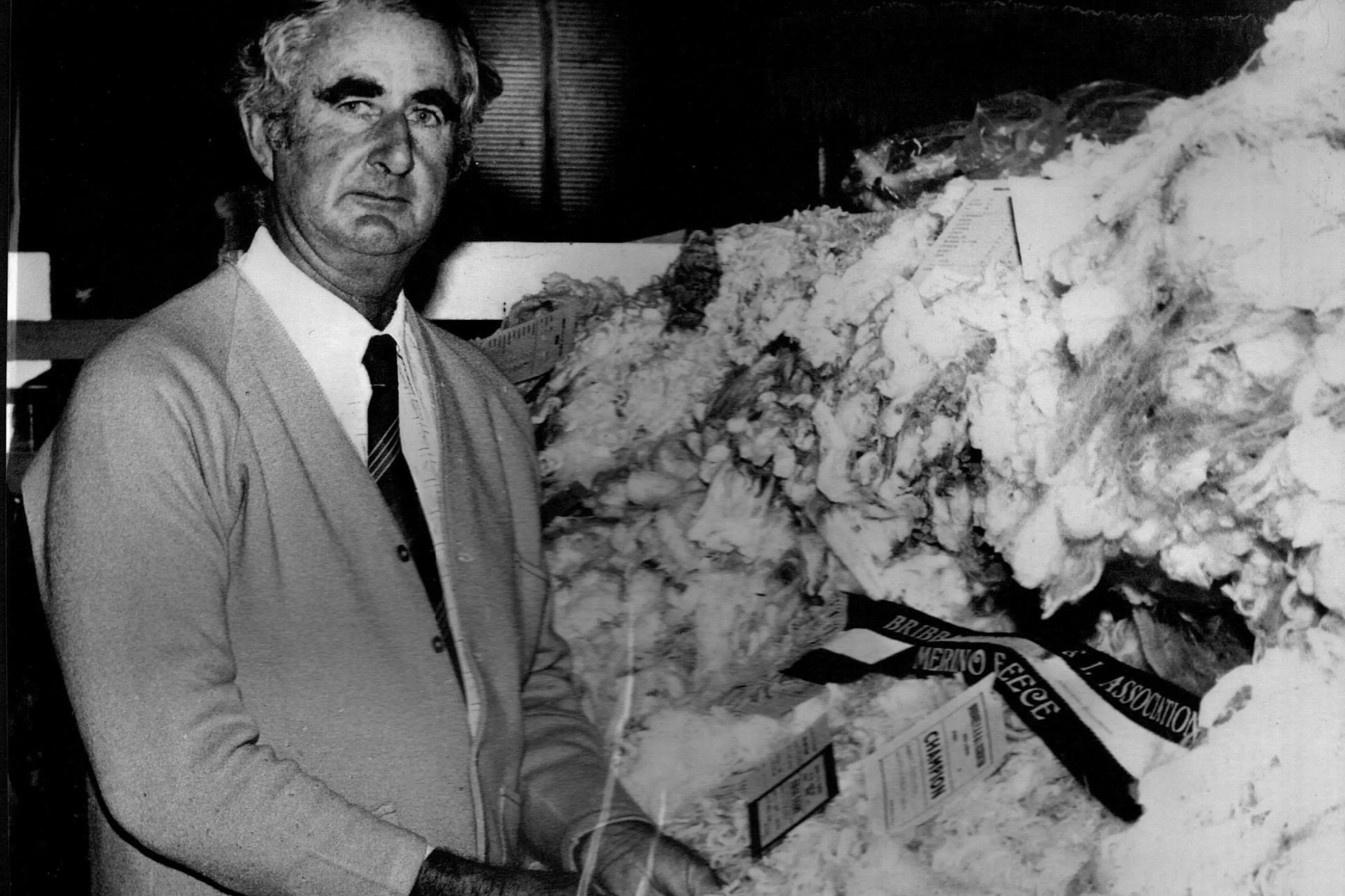
For 100 years, people have been turning up to the Bribbaree Show.

They have brought sheep and horses, wool and produce, cakes and preserves. They have volunteered as stewards, sat on committees, sponsored events, entered competitions and gathered at the showground year after year.

The fashion has changed.

The district has changed.

The population has changed.

But the habit of showing up has not.

This year, the Bribbaree Show will mark its 100th staging — an extraordinary milestone for a small rural community that has adapted to changing times while holding tightly to the traditions that made the show matter in the first place.

For Bribbaree Show Society president Matt Hunter, the milestone is as much about the people behind the show as the event itself.

“There’s been so many local families that have helped with this show over generations,” Mr Hunter said.

“People come and go, obviously, but there are still the old names there.

“When I look through the schedules and through the past committee members, there are still family names there today that were there at the beginning,” he said.

75080.0
75080.0
A glimpse of the Bribbaree Show in 1929, with a young Rhona West pictured in the foreground. Mrs West remained connected with the show for much of her life. Photo supplied by Rhona West.

The organisation behind the show was formed in 1924, with the first show held two years later.

It was originally known as the Bribbaree Pastoral, Agricultural, Horticultural and Industrial Association, before becoming the Bribbaree Show Society Incorporated in 1987.

Much of the detailed record of those earliest years was lost when a house where historical material was being stored was destroyed by fire in 1981.

But pieces of the show's history survived in the homes and collections of local families.

Mr Hunter said the society now had almost every show schedule dating back to 1927.

Those surviving schedules offer a glimpse into not only the history of the show, but a changing rural Australia.

Advertisements once encouraged men to order a new suit in time for show day, while photographs show crowds arriving dressed for the occasion.

“Everyone was dressed up to the nines,” Mr Hunter said.

“I don’t know how they got away with it, because they were still trudging around in dust or mud and all that, but they just seemed to be clean all the time.”

One photograph from the 1929 Bribbaree Show captures that world particularly well.

In the foreground, a young girl looks towards the camera while the show carries on behind her.

Mr Hunter identified her as Rhona West, a member of a local family with a long connection to the show.

He said Mrs West remained involved with the event for much of her life before her passing last year.

The image is now part of the collection being brought together for the centenary.

The society recently held a memorabilia day, inviting local families to bring forward old photographs, schedules and keepsakes.

“It was just crazy what was coming out of the woodwork,” Mr Hunter said.

A pavilion at this year's show will be devoted to displaying that history.

75080.0
75080.0
Crowds gather for the tug-of-war at the Bribbaree Show, a tradition that continues to bring the community together. Photo: Bribbaree Show Society.

While fashions have changed and new attractions have been added, many of the show’s traditional competitions remain strikingly familiar.

Wool, farm produce, cooking, preserves, needlework, handicrafts, horticulture and livestock continue traditions that generations of exhibitors would recognise.

“A lot of the sections in the pavilion are very similar,” Mr Hunter said.

“The horticulture and agriculture would be much the same as well.”

This year's centenary will also bring some old traditions back while adding a few new ones.

A Grand Parade will return after an absence of many years, the program will extend into the evening, and the Bribbaree Classic cycling event will mark the milestone with a new 100-kilometre course.

The Farmer's Challenge remains one of Mr Hunter's personal favourites, while a 100-yard dash — deliberately yards rather than metres — will carry the centenary theme.

After their chaotic debut last year, the Jack Russell race and Dachshund Dash will also return.

“They were complete chaos, but the crowd were crazy about it,” Mr Hunter said.

“They just loved it.”

The program has become so full that the committee has had to stop adding to it.

“Our schedule is chock-a-block,” Mr Hunter said.

“We cannot fit another thing in.”

But behind the packed program sits a more serious question facing many small rural communities.

Who comes next?

Mr Hunter said Bribbaree once supported many more families, particularly through the 1940s, 50s and 60s, before the population gradually declined.

He said changes in farming and a declining local population had made the future of small rural communities an ongoing concern.

But at Bribbaree, there is also reason for optimism.

A junior committee of around a dozen young people has become part of the show society, supported by experienced committee members who are helping them learn how an event of this scale comes together.

Mr Hunter recently sat in on one of their meetings.

“It was just great enthusiasm,” he said.

“It was really exciting.”

The junior committee is organising a sold-out black-tie dinner under the theme 'Celebrating a Century – Cultivating the Future'.

All 150 tickets sold in just one day.

Mr Hunter hopes members of the junior committee will gradually move into the main committee and eventually take on senior roles.

“They’re going to be the next crop,” he said.

“I think it’s extremely important.

“We want to slowly move them into the main committee and eventually take on the big roles.”

As preparations for the 100th show have gathered momentum, the response from the wider community has demonstrated just how much the event still means.

Mr Hunter said the society had been overwhelmed by sponsorship for the centenary — not only from businesses, but from local families.

Some offered money without asking for advertising or recognition in return.

“They said, ‘We don’t need an ad in your schedule. We don’t want recognition. We want to give you this because we want you to make the show great,’” he said.

“I thought, wow, this is amazing.”

That generosity sits alongside the old schedules stored in cupboards, the photographs kept for decades, the volunteers who return each year and the young people now learning how to run the show themselves.

Mr Hunter describes Bribbaree as “the ultimate little show”.

“It is old school,” he said.

There is the historic pavilion, the bar, the horse ring, wool, jams, preserves and photography alongside the newer attractions.

Then he offers another description.

“It’s the biggest little show in the west.”

After 100 shows, the achievement is not simply that Bribbaree still has an agricultural show.

It is that a tiny rural community has kept choosing to make one happen.

And now, as one generation looks back over a century of photographs and memories, another is beginning to take its place.

If the Bribbaree Show is to survive its next 100 years, that may be the most important tradition of all.